FIND YOUR LOCAL
ARROW SERVICE CENTER
Tampinoma melanocephalum
Ghost ants are known as "ghosts" because when they run around on light surfaces, their transparent abdomens and legs seem to vanish, leaving only a dark head and thorax visible. On darker surfaces, all you see are pale patches moving about. When ghost ants are crushed, they emit the scent of coconut.
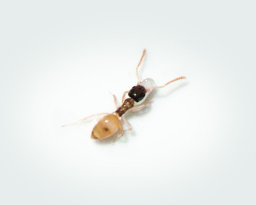
| Color | Dark head & thorax; pale abdomen & legs |
| Legs | 6 |
| Shape | One node segment, hidden under abdomen; uneven thorax no spines |
| Size | 1/16th inch long |
| Antennae | True |
These ants can develop very large colonies, with many queens. Colonies can divide or split through a budding process similar to pharaoh ants and white-footed ants. Ghost ants readily enter buildings, usually by trailing from nests along guidelines, such as foundations or tree branches. Ghost ants will enter structures from ground to roof levels. Workers run rapidly and erratically, trailing along edges and corners. Indoor trails are hidden, under carpet edges and along electrical wires in wall voids. Because ghost ants need moisture, they often trail to sinks, washbasins, commodes and shower stalls. Outdoor trails can be found behind grass or mulch lining sidewalks, patios and foundation walls.
Ghost ants are partial to sweet foods, particularly aphids and honeydew. The workers go out and gather food, including insects, to bring back and feed the colony. Indoors, ghost ants will eat sweet foods, but they prefer greasy food if it is available.
These ants are attracted to moisture, warmth and sweet and greasy foods.
Ghost ants cannot sting, but they can bite. However, they are nonaggressive and will only bite if their nest is threatened. These bites are barely noticeable and they do not pose any health threats to humans. The only threat ghost ants pose is the potential to contaminate food.
Ghost ants enter the home through cracks and gaps in the foundation. Eliminating these gaps can halt their entry. Remove any tree branches that touch the house and move moisture sources as far from your home as possible.
Ghost ants can be spotted indoors in flowerpots or other moist areas. However, the most common way to spot an infestation is simply seeing the ants around your home.
For outdoor infestations, spray any ant mound you see with insecticides. Inside your home, using sprays can split the colony and make the infestation worse. Protein baits are most effective for ghost ant removal.
For a complete ghost ant treatment and removal plan, contact our team using the form below.
After you submit the information below, a trained professional in your area will get in touch within 1-2 business days to set up a date & time that is convenient for you.







 YouTube
 Facebook
 Twitter
 Instagram
 LinkedIn