FIND YOUR LOCAL
ARROW SERVICE CENTER
Technomyrmex albipes
White-footed ant colonies can grow to monumental sizes, often reaching two to three million individuals — making them incredibly difficult to control.
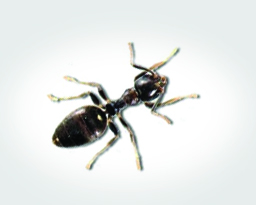
| Color | Dark body, usually black; pale yellow tarsi at end of legs |
| Legs | 6 |
| Shape | One node segment, flattened & hidden under abdomen; uneven thorax |
| Size | 1/8" |
| Antennae | False |
White-footed ants establish well-defined, easy-to-find foraging trails outside infested buildings. Trails commonly follow structural guidelines, such as edges of sidewalks, edges of brick buildings, ledges and soffit corners. Foragers often move into buildings from trees and shrubs touching walls or roofs. Once inside, workers forage along baseboards above and below carpet edges. White-footed ants also prefer sweets. Outdoors, they feed on honeydew and tend aphids, mealy bugs and scales.
These ants like to nest in dead wood, but will also invade and short out air conditioners and other devices. They nest in piles of lumber, firewood, stones, bricks, trash and heavy vegetation near foundations or in trees. Indoors, they nest in wall voids, potted plants and atriums. A single colony can encompass many sites, both close by and far away from a single nest. These extended colonies exchange workers, brood and food.
In swarm season, some white-footed ants have wings that are used to help them branch out and create new colonies.
Strongly attracted to sweet food, they’ll also eat dead insects or other protein.
The best way to identify a white-footed ant is by looking at the tarsi (section at end of the legs) are very light yellow or yellowish white in color. This is what makes it look like they have white feet.
You can spot a white-footed ant infestation by seeing trails of ants going to and from nesting sites. They can also be seen in moist environments like decaying trees, in old termite galleries, under roof shingles or in or near skylights, kitchens and bathrooms.
White-footed ants are tough to get rid of, so prevention is key. Make sure to seal up any cracks and crevices these ants could use to get inside your home. Because these ants are so motivated by sweet things, it is important to keep all household foods stored in tight containers and out of reach.
Unlike most ants, this ant species doesn’t regurgitate or share food, so toxic baits are only useful to kill the ones that eat it. Be sure to spray all outdoor crevices around your home. Indoors, use insecticide dust.
If you have a white-footed ant infestation of any kind, Arrow can help. For a customized treatment plan, contact our team using the form below.
After you submit the information below, a trained professional in your area will get in touch within 1-2 business days to set up a date & time that is convenient for you.







 YouTube
 Facebook
 Twitter
 Instagram
 LinkedIn