FIND YOUR LOCAL
ARROW SERVICE CENTER
Scutigera coleoptera
The house centipede is a common pest in many parts of the United States. Unlike most other centipedes, this species generally lives its entire life inside a building.
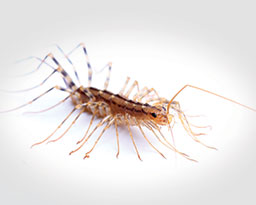
| Color | Grayish yellow with 3 dark stripes |
| Legs | 30 |
| Shape | Long thin body with very long legs |
| Size | 1" - 1½" |
| Antennae | True |
House centipedes are nocturnal predators that eat many types of soft-bodied insects and larvae, including spiders, silverfish, cockroaches, crickets, moths, bedbugs, earthworms, and even other centipedes.
House centipedes locate their prey using their long antennae. In order to eat the prey, house centipedes utilize a pair of claws on the front of their body to inject paralyzing venom.
House centipedes are attracted to humidity and cool, dark spaces. Due to this, they prefer to live in dark, damp areas such as cellars, closets, bathrooms, attics (during warmer months), cement block walls, and unexcavated areas under the house. Eggs are laid in these same humid places, as well as behind baseboards or beneath bark on firewood.
House centipedes have a lifespan of up to seven years, with most averaging around three years. This is much longer than many other of its insect counterparts, which typically live for one season. House centipedes experience three stages in their life cycle, from eggs, to larvae, to a full-grown adult.
Although this centipede can bite, it’s rare for them to bite humans or pets. Moreover, its jaws are quite weak and barely able to break skin. There usually is not more than a slight swelling if a bite does occur. As a result, house centipedes are not considered dangerous to humans or pets.
From an entomological point of view, house centipedes could definitely be considered beneficial, since they eat insects that can be more of a pest in your home. House centipedes help control the populations of these small insects and invertebrates, making them an important part of the ecosystem.
Using dehumidifiers in basements and other damp areas to lower the moisture content of the air can help with house centipede prevention. Eliminating spiders and other small pests through vacuuming will also help prevent house centipedes, as well as sealing up potential entry points with caulk, and moving damp piles of leaves or other organic matter away from your home.
After you submit the information below, a trained professional in your area will get in touch within 1-2 business days to set up a date & time that is convenient for you.







 YouTube
 Facebook
 Twitter
 Instagram
 LinkedIn