FIND YOUR LOCAL
ARROW SERVICE CENTER
Polistes sp.
With over 100,000 species worldwide, wasps are one of the most important flying insects. They keep other insect populations down and also engage in pollination. In fact, nearly every pest insect on Earth is preyed on by a wasp species — either as food or a host for its parasitic larvae. Wasps are so good at controlling pest populations that agriculture now deploys them to protect crops.
Some wasps are social and will become aggressive when defending their nests, but most wasp species are solitary and non-stinging. They spend their days foraging for food and finding insects to paralyze and they their eggs inside — providing a built-in food source for their offspring.
Paper wasps are social insects that build grey, paper-like nests in trees and vegetation, or under the eaves of homes, docks and garages.
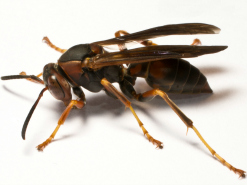
| Color | Varies with Species |
| Legs | 6 |
| Shape | Oval with smoky black wings flat in the resting position |
| Size | ¾" - 1" inch long |
| Antennae | True |
Paper wasps have slender bodies with defined waists, yellow markings and black wings that lay flat when at rest.
Paper wasps are semi-social insects with a caste made up of workers, queens and males. Fertilized queens overwinter in protected spaces beneath tree bark or in cracks and crevices in homes.
When spring arrives, they select a nesting site, begin building a nest and lay their eggs. In late summer, the queen stops laying eggs and the colony declines.
Paper wasps can be annoying, but they are usually considered beneficial insects. They prey mainly on insects and tend to avoid humans when possible. To avoid their wrath, try to avoid their nesting sites.
Paper wasps get their name from their nests, which are built from wood fiber collected from plants, which is chewed to form paper-like, hexagonal cells. These cells come together to form a nest resembling an upside-down umbrella, giving paper wasps the nickname “umbrella wasps”. Mature nests contain up to 200 cells.
Since paper wasp nests are fragile, the queen will seek out a protected area like a doorway, eave, doorframe, tree limb, dense vegetation or even stacks of wood for her kingdom.
Once her larvae grow to adulthood, the queen reigns and lays eggs as her young gather food, build nests and tend to the larvae. By late summer there are as many as 5,000 wasps in a nest.
If the queen dies, the most aggressive female will become the new queen and begin to lay her own eggs. In late summer or fall, males, unmated females and the founding queen will all die. Mated females will go into hibernation during the winter and emerge in the spring to form colonies of their own. Only fertilized queens will survive the cold.
Forging during the day and resting at night, paper wasps prey on caterpillars, flies, plant nectar and beetle larvae, which they often feed to their own young.
Paper wasps are attracted to things that resemble their favorite pollination targets, so avoid wearing perfumes and bright colors, or patterns that could resemble flowers.
While paper wasps can be dangerous and aggressive, they generally do not attack unless they or their nests are bothered. Paper wasps will sting to protect their colony, releasing toxins that can be harmful to mammals like birds, wolves, cats and dogs.
Humans can also experience severe reactions when stung by paper wasps. Wasps can sting repeatedly; causing pain, swelling and whole-body effects that can trigger allergic reactions that may result in death.
To avoid their stings, leave the immediate area and don’t swat or squash wasps. These behaviors will release pheromones that attract other angry wasps.
After a sting, wash the wound with water to remove the venom and treat with an antihistamine product that can help ease the pain. If you start to experience dizziness, fatigue, nausea or trouble breathing, seek immediate medical attention.
Wasp stings may also transfer harmful bacteria that could result in infection or even sepsis. If the wound remains hot and inflamed for more than eight to 12 hours, seek immediate medical attention.
There are several methods of getting rid of paper wasps, some more effective than others. Since a wasp may travel up to 1,000 yards in search of food, wasp traps aren’t always adequate. Still, setting out wasp traps in early spring, when there are fewer wasps, is the most practical method. By killing the queen early in the season, you can prevent the appearance of thousands of workers.
You can also use a glass wasp trap or make a homemade trap out of a 2-liter Coke bottle with dish soap at the bottom.
Professionals can remove wasps in a non-toxic way using vacuums or dusts. Nests in wall voids are particularly difficult to remove and require professional help since failed removal attempts could push a nest further into a house. Never try to burn an active wasp nest, since this will make them angry and aggressive.
To prevent wasps from setting up near your home, seal up any entry points like unsealed vents, torn screens, window cracks and open dampers. Hanging a fake wasp nest could also prevent industrious wasps from building nearby.
In the spring and summer, when wasps are looking for protein, remove any outside pet food or picnic scraps, open garbage or compost bins. In late summer and early fall, wasps start to crave sugary foods, so watch out for open soda cans, fruit juice and fallen fruit. Cover compost and avoid walking barefoot near fruit trees.
Painting the eaves of your home sky blue can also prevent nest construction since wasps will not build a nest on blue paint.
If wasps are spoiling your outdoor fun, fill out the form below and one of Arrow’s dedicated professionals will send these pests packing.
After you submit the information below, a trained professional in your area will get in touch within 1-2 business days to set up a date & time that is convenient for you.







 YouTube
 Facebook
 Twitter
 Instagram
 LinkedIn