FIND YOUR LOCAL
ARROW SERVICE CENTER
Columba livia
Pigeons are easily recognizable by their distinct coloring. With their white-gray rump, iridescent facial feathers and black stripes on their tails and wings, these birds are easy to identify. Pigeons reproduce incredibly quickly, and mating occurs year round. Despite their speedy reproduction rates, pigeons are monogamous creatures that lay one or two eggs at a time, which hatch within 18 days. Baby pigeons are fed “pigeon milk,” or regurgitated food, by both their parents until they are old enough to find food on their own.
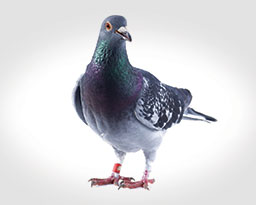
| Color | Varies but commonly gray with a whitish rump, two black bars on wing feathers and a broad black band on the tail; red feet |
| Legs | 2 |
| Shape | Bird |
| Size | Up to about 11"; weight up to about 13 ounces |
| Antennae | False |
Often called the “rats of the sky,” pigeons can be incredibly problematic. These birds can carry dangerous diseases like cryptococcosis, toxoplasmosis, salmonella, food poisoning and more. Their droppings may also harbor the growth of fungus, which causes histoplasmosis, which can accelerate the aging of structures and statues. Even more alarming, these social birds often serve as unwitting hosts to fleas, lice, mites, ticks and other pests, which can create secondary infestations.
The most obvious sign of a pigeon infestation is the presence of many birds, pigeon nests or their droppings.
The best way to prevent pigeons from roosting in or near your house is to make your home undesirable. Remove any and all food they could get access to, place pointy objects on pigeon-friendly surfaces and place nets across open areas.
The steps for pigeon removal and prevention are the same: make their living space uninhabitable. Killing pigeons is not effective and it will not root out the source of the problem. Instead, eliminate all food sources and remove their nests and replace them with objects that prevent them from returning.
If you have some pesky pigeons living in your home, fill out the form below and one of Arrow’s dedicated professionals will solve your pigeon problem.
Pigeons prefer grains, but they are not picky when it comes to their meals. Much of their diet comes from humans who drop or spill their food, or place leftovers in open trash cans that pigeons can scavenge. These birds like to hang out on ledges and other narrow areas high above the ground. They like to roost in covered, high areas, and their nests can frequently be found in places like steeples or under bridges.
Pigeons are true city dwellers who are dependent on humans to provide food, roosting and nesting sites. This is why you often see them gathered around city parks, buildings and bridges. Pigeons are also commonly found around agricultural areas, as well as warehouses, feed mills and grain elevators.
After you submit the information below, a trained professional in your area will get in touch within 1-2 business days to set up a date & time that is convenient for you.







 YouTube
 Facebook
 Twitter
 Instagram
 LinkedIn