FIND YOUR LOCAL
ARROW SERVICE CENTER
Sciurus carolinensis
Also known as tree squirrels, gray squirrels usually live in wooded areas and make their nests in trees, though they often enter homes during late fall — looking for somewhere to nest during the winter.
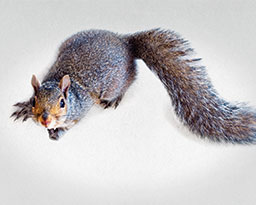
| Color | Gray with white under belly |
| Legs | 4 |
| Shape | small rodent with bushy tail |
| Size | Head & Body length 9" to 11", Weight - 14 to 21 oz |
| Antennae | False |
Hoarders by nature and armed with an excellent spatial memory and sense of smell, gray squirrels are capable of making and remembering several thousand caches per season.
These intelligent critters aren’t too picky about what they eat, choosing to feed on a variety of nuts, seeds, bulbs, insects, fruit, tree bark, buds, acorns, fungi, vegetables, and even insects, frogs and small nesting birds. Though they do not hibernate or venture out during the heat of the day, gray squirrels tend to be most active during the early and late hours of the day.
Gray squirrels typically have two litters per year, one in late summer and one in early spring, ranging from two to six pups. These pups will leave the nest after 12 weeks, or will sometimes spend the winter with the mother if born in the fall. Gray squirrels are often regarded as an invasive species due to their propensity for overpopulation.
Squirrel nesting behavior can often be seen in the wild, where squirrels construct nests out of leaves and dry twigs in the cavities of oak and hickory trees.
Due to their large populations, gray squirrels are known for seeking shelter in human structures during the coldest months of the year. Looking for warmth in late fall and winter, squirrels often nest in attics and exterior walls, using insulation as nesting material.
Gray squirrels can do considerable damage to exterior trim and siding as they widen or create new ways to enter structures. Once inside, they will gnaw on electrical wiring — causing shorts and even fires. Squirrels may also carry fleas and other unwanted organisms that can infest a structure long after the squirrels themselves have come and gone.
Due to their playful nature, these early risers are easily identified by homeowners who will often hear them scurrying in attics or other high places.
In an attempt to grind down their constantly growing teeth, squirrels are always investigating new territories and chewing on wood, sheetrock, ceilings and attic support structures.
Gray Squirrels are protected game animals in many areas, but homeowners can often limit their damage by using metal flashing or metal mesh to cover any possible entry routes while the animal is out foraging.
Other tried and true methods include limiting nearby food sources by squirrel-proofing bird feeders, fencing gardens, and using squirrel repellents made with cayenne and black pepper. Other effective squirrel prevention methods include sealing trashcans and raking up nuts, berries and acorns found in the yard.
Trimming tree branches and adding gutter guards that cover downspouts can also prevent squirrels from accessing rooftops. Remove any firewood stacked against your home, repair cracks in foundations and walls, seal entry points, place guards on chimneys and dangle ropes down chimneys so squirrels have an escape route if they fall in.
Squirrels build nests for sleeping and rearing young. Usually built 30 feet off the ground in the fork of a tree limb, squirrels can typically build summer leaf nests in a day. Tree dens are warm, protective nests built in hollow tree trunks. Particularly important during winter months, litters born in tree dens are much more likely to survive than those born in leaf nests. Of course, to these agile and amazing climbers, your home is often a desirable alternative to a hollow tree. Squirrels have been known to find refuge in attics, ceilings, eaves, and walls.
Getting rid of a squirrel, especially one living in your walls, requires inventive and ingenious exclusion methods. The only approved method for removal is live trapping. Once trapped, squirrels should be relocated at least four to five miles away so that they will not find their way back to your home.
To remove a squirrel from inside your home, set one-way exclusion doors or live cage traps (baited with seeds, crackers or fruit). To ensure that an infestation won’t return, it is recommended that one seals all existing holes and also removes any baby squirrels by cutting out a portion of the wall and removing the squirrel nest with thick welder’s gloves. To safely and effectively treat a squirrel infestation, contact the professionals at Arrow Exterminators using the form below.
After you submit the information below, a trained professional in your area will get in touch within 1-2 business days to set up a date & time that is convenient for you.







 YouTube
 Facebook
 Twitter
 Instagram
 LinkedIn