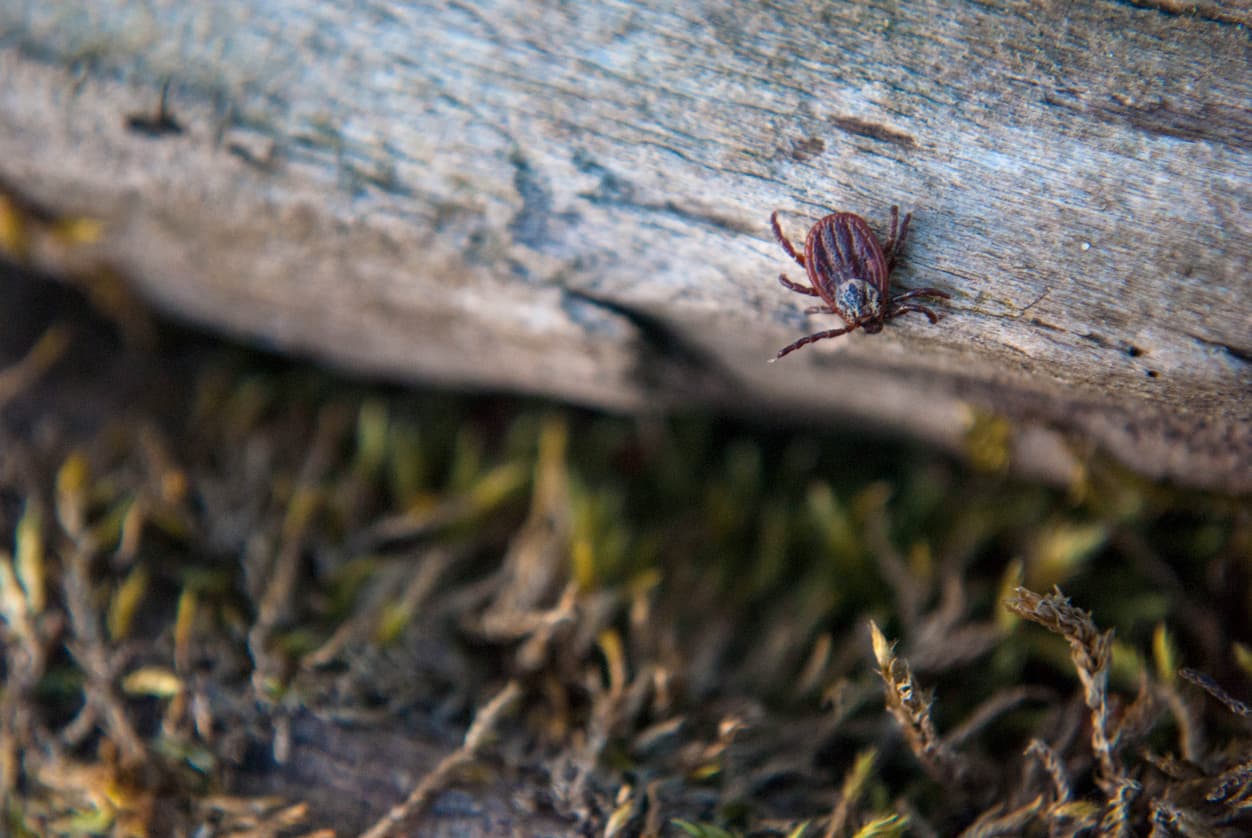
When winter arrives and frost settles in, it’s easy to assume ticks disappear right along with mosquitoes and other warm-weather pests. But if you’ve ever wondered, “Where do ticks go in the winter?” the answer might surprise you.
While extreme cold can reduce tick populations, most ticks don’t simply vanish once temperatures drop. In fact, many species are well equipped to survive winter — and some even remain active when conditions are right. Here’s what ticks are really up to during the colder months, and why it’s still smart to stay aware.
Do Ticks Die in the Winter?
Not entirely.
When temperatures dip below 10 degrees Fahrenheit, roughly one-fifth of the tick population may die off. But that means the majority survives. Ticks are resilient pests with built-in survival strategies that help them withstand cold weather — especially milder winters. So while winter may slow them down, it doesn’t eliminate them.
So Then Do Ticks Hibernate?
Sort of — but not in the way bears do.
Many ticks enter a state called diapause, which is similar to hibernation. During diapause, ticks reduce their activity and slow their metabolism to conserve energy. They also produce natural compounds called cryoprotectants that help keep their bodies from freezing.
Ticks in diapause typically burrow beneath leaf litter, soil, logs, or dense vegetation, where temperatures are warmer. Once the ground warms back up, they emerge and resume normal activity.
This means ticks don’t fully “sleep through” winter. They’re more like pests in low-power mode.
 Are Ticks Active in Winter?
Some tick species don’t rely on diapause alone. Instead, they seek out warm-blooded hosts to survive the cold. And for ticks, a deer acts as the ultimate bed and breakfast.
As deer become more active in the fall, ticks begin the hunt for their winter hideaway. Not only can they attach to and feed on the animal, but a deer’s body temperature keeps ticks warm and alive throughout cold snaps.
Deer ticks and western black-legged ticks are known to be active during winter months, especially during milder spells. These ticks spend long periods attached to their host, feeding and staying warm thanks to body heat. Fall and winter can actually mark the start of their prime feeding season.
If ticks can’t find a deer, they may latch onto other animals — including pets or humans — which is why winter tick bites, while less common, are still possible.
A Warm Day Isn’t Always Good News
Ticks are highly sensitive to temperature changes. When winter weather fluctuates and warmer days appear, ticks may mistake them for early spring.
On these days, ticks can become temporarily active, crawling out of hiding in search of a host. If freezing temperatures return, some ticks won’t survive, but others will retreat back and wait it out. This stop-and-start activity is one reason ticks can feel unpredictable during winter months.

How To Avoid Tick Bites During Winter
It’s still important to practice winter tick prevention, especially if you spend time outdoors or have pets.
When hiking, hunting, or working outside, wear long sleeves and pants to protect your skin. Lighter-colored clothing is also recommended because it allows you to easily spot a tick if it attaches to you. Check yourself, your children, and your pets after spending time in wooded or grassy areas.
It’s also important to know that ticks typically must be attached for about 36 hours to transmit Lyme disease, so quickly remove them if you find one on you or your pet.
Get Winter Pest Control Protection
Like ticks, there are plenty of other pests that hang around in the winter. If you’re ready for a bite-free and pest-free season, contact us for a personalized winter-proof pest control plan.